by Sue Cag and Kim Dicso
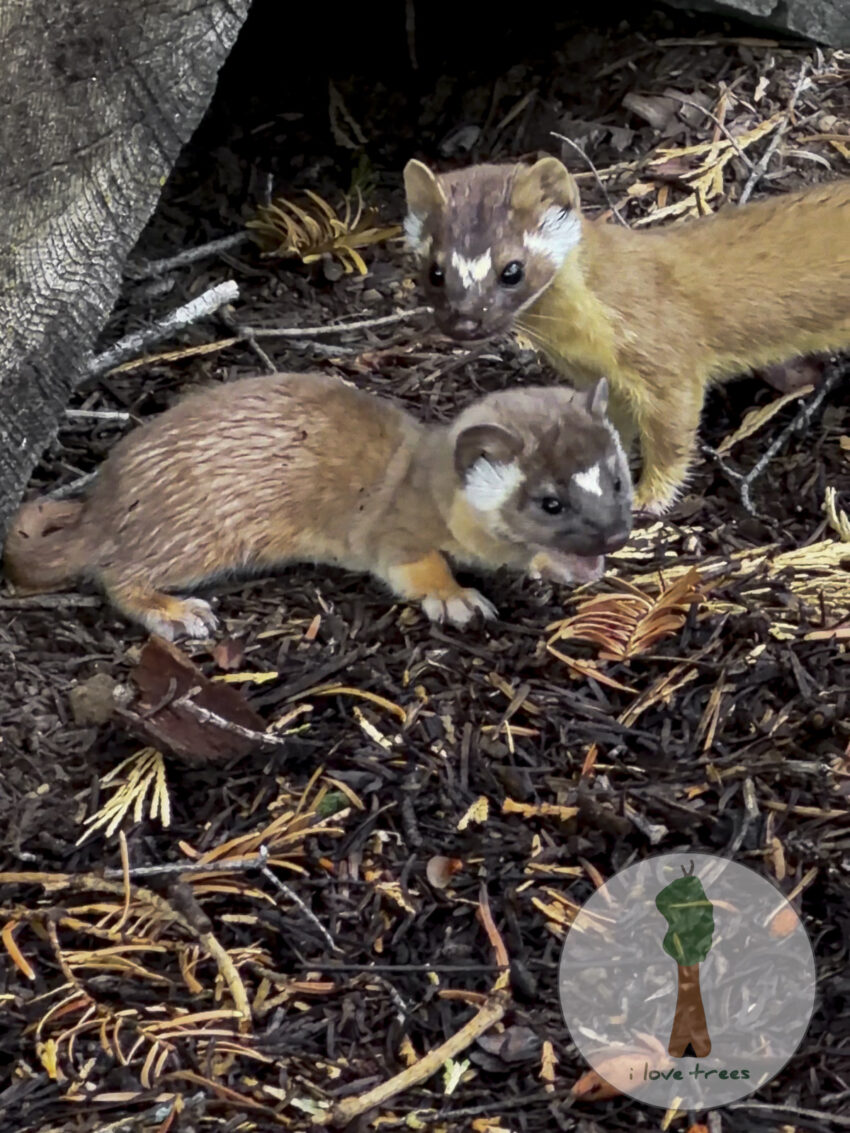
The sequoia forest, like all forest ecosystems, thrives on balance. If there is an increase in prey animals, a surge in predators should follow. I’ve certainly seen an uptick in hawks over the past few years or so in response to the surge of songbirds and rodents. I regularly see signs of bobcats, coyotes, and foxes taking advantage of the abundant prey. However, even I was surprised and delighted to witness a family of weasels — one of the most notorious predators — in my own backyard. They were smaller than expected, roughly the size of Douglas squirrels, and it was hard to believe that these adorable beady-eyed creatures had such a reputation for being vicious. Hard to believe, until one of the parents saw me as a threat to their young. I kept my distance as I filmed the young weasel barking and exploring near a hollowed-out log. The video was taken at a significant zoom distance. However, as I filmed, the parent weasel rushed in, initially tried to whisk the young away, then turned to me with what I could only describe as bloodlust. I backed up quickly while envisioning the weasel leaping up to take a bite out of my skin. Weasels are small, but not to be underestimated. These pint-sized predators can injure or kill prey much larger than they are. I didn’t see them again after that day, but I hope that before they departed they turned some of that primal aggression toward the overabundant chipmunks and deer mice practically underfoot. It is, after all, all about balance.
Video:
 About the Author:
Sue Cag is a musician, artist, writer, photographer, and nature preservationist.
All photos and video by Sue Cag. All Rights Reserved. Photos and video may not be used without permission.
About the Author:
Kim Dicso is a singer-songwriter, multi-instrumentalist, prosaist, hiker, traveler, vegan, and contributing author of nature writing for ilovetrees.net. Find her music at folkstar.net. Find her writing at kimdicso.wordpress.com.